

By Michael Burt
Dorrigo Plateau, NSW - .Antimony mining activities have quietly returned to the Dorrigo plateau with two companies activating three Exploration Licenses (EL) this year.
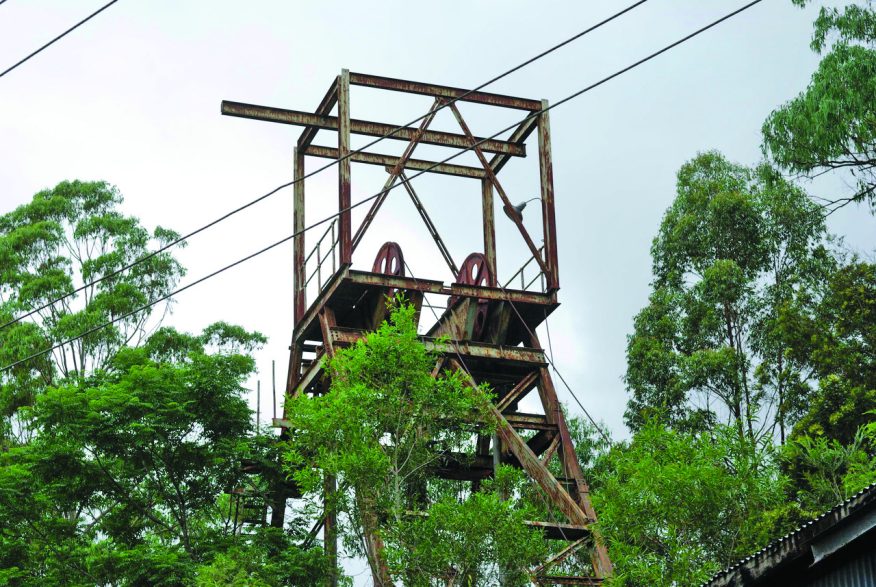
Trigg Minerals announced this week that analysis of historical samples from an old min site at Wild Cattle Creek had confirmed the plateau does boast Australia’s highest grade primary antimony resource.
“These outcomes reinforce our confidence that substantial high-grade mineralisation remains accessible at shallow depths, supporting our broader development strategy, and may inform future mine design by highlighting the potential for early, low-cost extraction,” said Trigg’s Managing Director Andre Booyzen
Trigg also announced in February that high grade tungsten had been discovered at the Wild Cattle deposit, increasing the economic viability of what was known as the Achilles Project
“With tungsten’s crucial role in defence, aerospace, and high-performance technology, Trigg Minerals’ Wild Cattle Creek deposit could emerge as a key domestic supply source for antimony and tungsten, aligning with Australia’s strategic push for critical mineral independence.”
The company said they would be reevaluating metallurgical recovery processes to optimise tungsten and gold extraction alongside antimony.
The company purchased the Achilles Project from Anchor Resources in October last year. Anchor Resources completed the most recent work on the project from 2005 to 2016 when it completed 23 drill holes. Strong community opposition at the time put a halt on any further mining activity.
The Bellingen Environment Centre (BEC) is planning to the same this time round, starting with a Public Awareness Community Meeting on antimony mining on the Dorrigo Plateau at Never Never Mind community centre on 31 May.
BEC President Cath Eaglesham said antimony mining poses a significant risk to water, soil and air quality due to the release of antimony and other heavy metals like arsenic, lead, and mercury into the environment.
“We must protect our river systems, the safety of our drinking water, the rights of landholders and traditional owners, and the environmental, economic and cultural well-being of an entire region,” Cath said.
“There are 60 to 80 thousand people that get their drinking water from the Clarence catchment, including Coffs Harbour.”
Cath said Trigg Minerals are expanding their exploration applications outside the Achillies Project area.
“They want to also go west of the Nymboida River along the Beilsdown fault line from Wild Cattle Creek over to the old Fletchers mine site in the Moonpar State Forest. That’s public land that is accessible to them right now to do exploratory drilling, and its right on the eastern boundary of the proposed Great Koala National Park. That is a a deep concern.”
“United Antimony is another group that had an exploration license granted in January this year and that covers North Dorrigo, Bostobrick, Tyringham and over to Moonpar Forest as well.”
“Australia has 10 per cent of the worlds antinomy and, unfortunately, most of that is in our region. There are currently 40 plus mineral exploration licenses in the Clarence catchment.”
The public meeting is being supported by the Blicks River Guardians and Lock the Nambucca Valley, who are opposing antimony mining activity at Taylors Arm.
Speakers include critical minerals expert Dr Lian Sinclair, Gumbaynggirr Elder Aunty Alison Buchanan, Dean Kelly from the Yuurrungga Aboriginal Corporation, ecologist Dr Jacqueline Williams, Georgette Allen from Lock the Nambucca Valley and Janet Walk from the Mudgee Action Group.
“Janet will be sharing a story about how they got the the community and farmers together to stop a lead and silver mine,” Cath said.
The BEC is also meeting this week to formulate a motion to take to the next Bellingen Shire Council meeting.
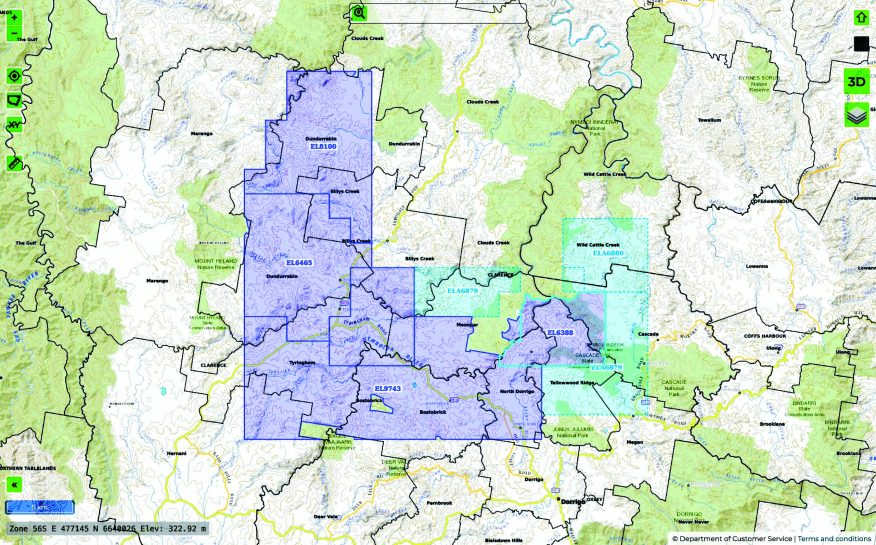
Dorrigo ELs ELAs MAP