

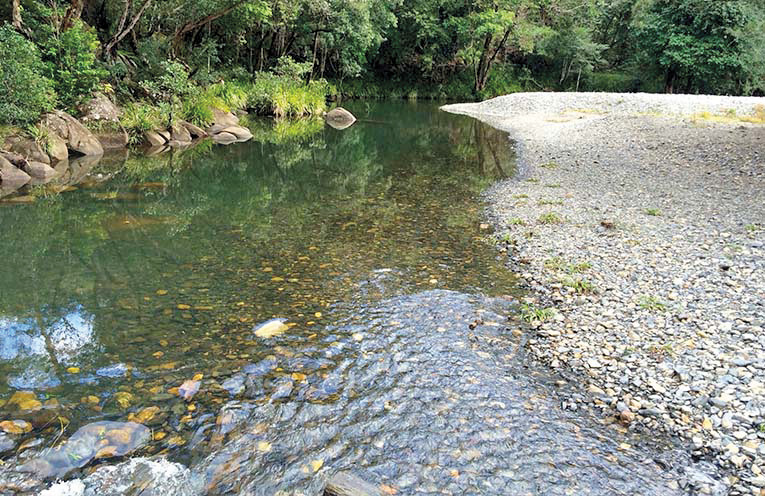
Ten private landholders along the Bellinger River have signed conservation agreements as part of the Bellinger River Snapping Turtle project.
They have committed to weed control works that will protect and regenerate over 24 hectares of remnant patches of Lowland Rainforest vegetation— a Threatened Ecological Community.
The initiative, supported by North Coast Local Land Services (LLS) in partnership with Bellinger Landcare, Yurruungga Aboriginal Corporation, and landholders, is targeting invasive species such as madeira vine, balloon vine, palm grass and taro. Weed control efforts will begin in the coming months, with ongoing works planned through to June 2028.
To ensure these activities do not impact Aboriginal cultural heritage, the LLS have engaged Yurruungga Aboriginal Corporation to undertake Cultural Health Checks across all sites before any ground disturbance begins. To date, 7 assessments have been completed, with findings used to guide weed control planning.
The Cultural Health Checks play a vital role in ensuring that on-ground works do not damage culturally significant sites. They also help build landholder awareness of cultural values and strengthen collaboration across all project partners.
“The Cultural Health Checks are a way for us to visually inspect the overall condition of the Country at each location,” explained Yurruungga Aboriginal Corporation Cultural Heritage Officer, Matt Flanders.
“This is not just looking for specific cultural evidence but also taking note of the vegetation health status; is there bulk weeds in the area, is the location being affected by non-natural issues, animal movements in the area. These cultural health checks all play an important role across all of Gumbaynggirr Country to ensure healthy Country and healthy people.”
This project is funded by the Australian Government Natural Heritage Trust and delivered by Local Land Services, a member of the Commonwealth Regional Delivery Partners panel.