

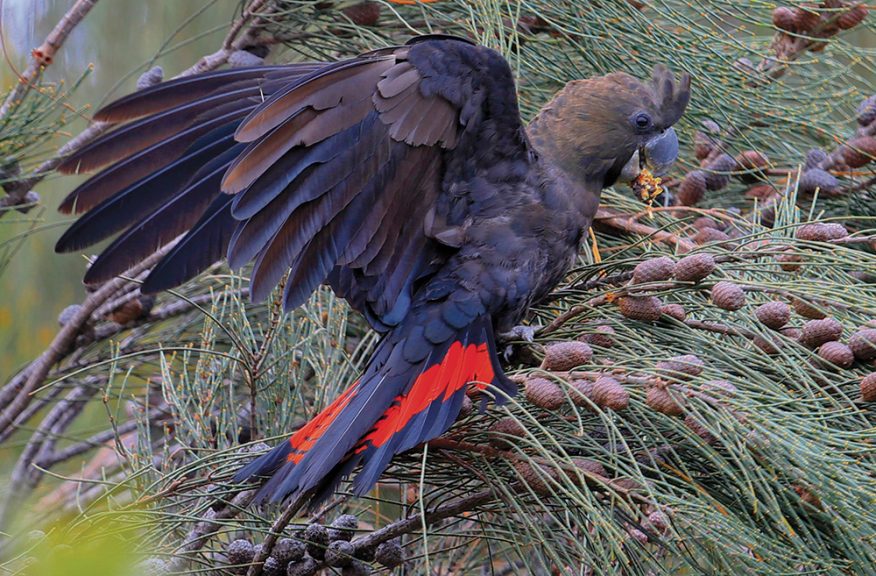
BELLINGEN SHIRE — An urgent call has gone out to eagle-eyed residents across the Bellingen Shire: your sightings of glossy black-cockatoos are vital to the NSW Government’s Biliirrgan project.
Eagle-eyed residents in the Bellingen Shire are encouraged to report sightings of glossy Black- Cockatoos to the NSW Government’s Biliirrgan project.
These spectacular birds with a distinctive call are known as Biliirrgan in Gumbaynggirr language.
They are a threatened species in NSW, and little is known about the size of the mid-north coast population or the locations of their nests.
That is why the Saving Our Species (SoS) team are enlisting the “Glossy Squad” of volunteers to find and monitor nesting hollows where glossies breed.
By reporting sightings, residents will support the Biliirrgan project in understanding more about these birds, aiding in their monitoring and protection from potential extinction.
The team is particularly interested in sightings from the Nambucca, Bellingen, Coffs, and Clarence local government areas.
Glossy black-cockatoos are easy to identify as they are the only black cockatoo with red tails on the Mid North Coast of NSW. Females (or flossies) have yellow on their heads.
They only eat the seeds from she-oak (Allocasuarina) cones and need to drink water each evening, when they can be seen at puddles, dams, waterholes, creeks or rivers.
Volunteers are asked to report: Locations where birds are drinking, pairs or lone birds with regular evening flight paths, and female birds begging males for food
Glossy sightings can be reported through the Biliirrgan App online survey or by emailing savingourspecies@environment.nsw.gov.au.
Birdlife Australia and the Glossy Black Conservancy have produced a field guide to support citizen scientists in collecting data on glossy black-cockatoos.
“The birds in our area seem to nest mostly from April to October, and we’re hoping to see good results again this season,” said Brian Hawkins- Senior Threatened Species Officer from Saving Our Species
“Since the Biliirrgan project began in 2023, the Glossy Squad has found nine nests and documented eight successful nesting attempts (and two failures) over two years of monitoring.
“It’s a great start, but we need to find more nests —we’re aiming for 30—to understand whether factors such as nest predation might be affecting breeding success, and to protect nest trees from threats such as clearing and fire.”