

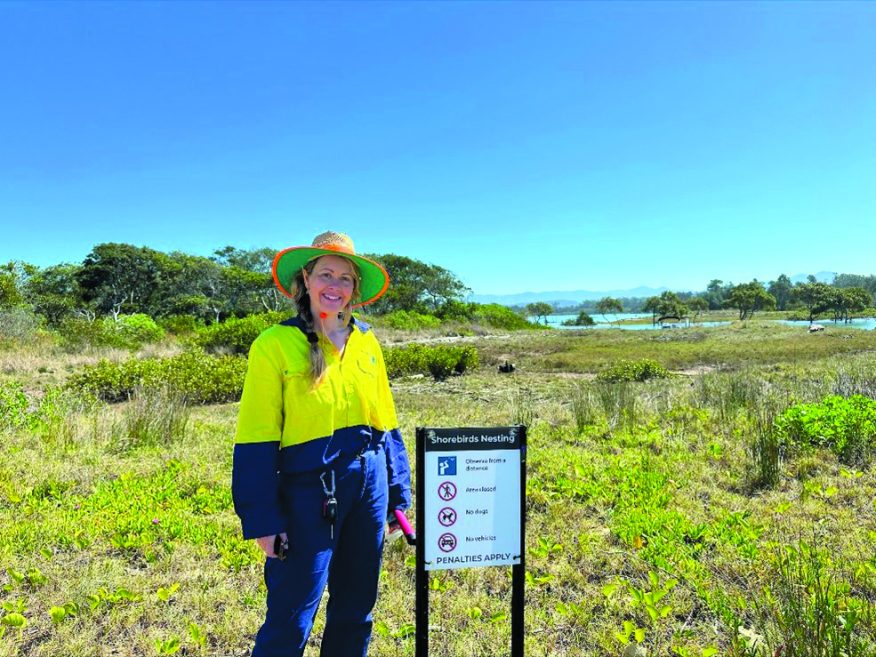
Shorebird season has arrived, with local and migratory birds flocking to the coastline to rest, feed, nest and raise their chicks. Bellingen Shire Council is working to protect these vulnerable species and is calling on the community to help “share the shore” this nesting season.
Four species of shorebirds are known to breed within the Shire: The Pied Oystercatcher (endangered), Sooty Oystercatcher (vulnerable), Little Tern (endangered) and the critically endangered Beach Stone-Curlew. With only 15 breeding pairs of Beach Stone-Curlews remaining in New South Wales, Urunga Island is fortunate to host one of these pairs. Recently, Council staff and scientists visited the site to observe the birds and install new signage to help protect them.
This work is part of a wider two-year shorebird study now underway across the Shire. The study will include scientific surveys of beaches and estuaries during consecutive breeding seasons to better understand shorebird habitat, local and migratory populations, threats, and long-term management options. This study has been made possible by grant funding received from the NSW Department of Climate Change, Energy, the Environment and Water under its Coastal and Estuary Grants Program.
Council is also inviting residents to take part in a citizen science project, encouraging community members to report sightings of threatened shorebird species to build valuable data for the study via the link provided on the Shorebirds in the Shire page on Council’s website.
Mayor, Cr Steve Allan is urging the community to get involved and share the shore.
“There are some simple steps you can take when visiting our beaches to help protect these precious birds,” Mayor Allan said.
“Stay below the high tide line when walking or driving, as birds often nest in the dunes. Keep your dog on a leash and under control, respect signage and temporary fencing around nesting areas, and always take your rubbish home. If you find a sick or injured bird, please report it to WIRES.”
Alongside the study, Council is hosting a series of educational events. Recently, community members attended a “Dog’s Breakfast” at Hungry Head, where National Parks and Wildlife Discovery Ranger Andrew Turbill led discussions on resident and migratory threatened shorebirds.
According to Bird Life Australia, some migratory shorebird populations have declined by up to 80% in the past 30 years. These remarkable birds travel more than 10,000 kilometres from the Northern Hemisphere to spend their non-breeding season in Australia. Our coastline provides them with critical habitat to rest, feed and build the energy needed for their return journey. Among the migratory visitors to the Shire are two critically endangered species: the Curlew Sandpiper and the Eastern Curlew.
With so many threatened shorebirds depending on our coastline, Council is reminding everyone to “share the shore” this nesting season.
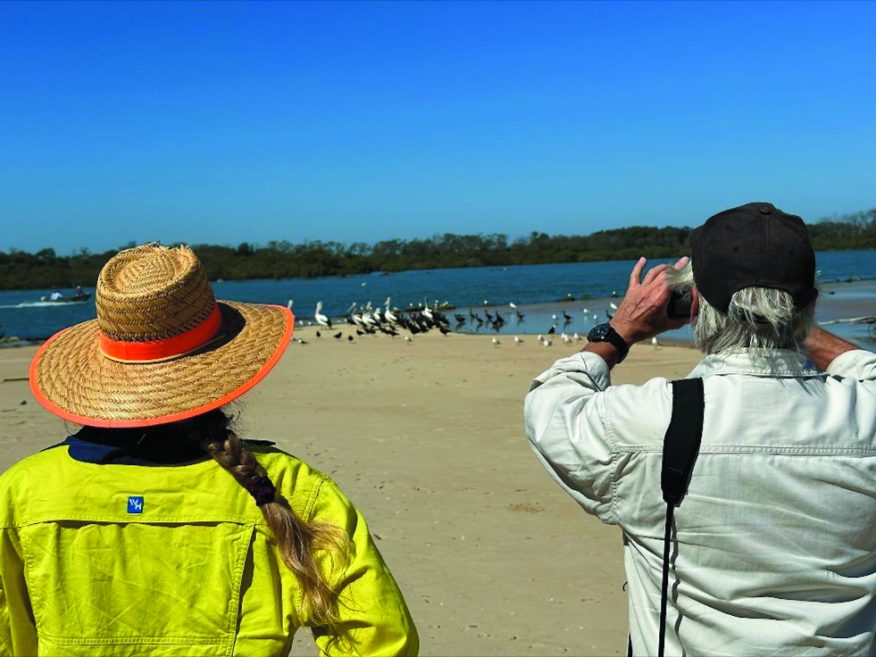
Scientists and BSC staff conducting threatened shorebird surveys on Bellingen Island

Dogs Breakfast educational event at Hungry Head