

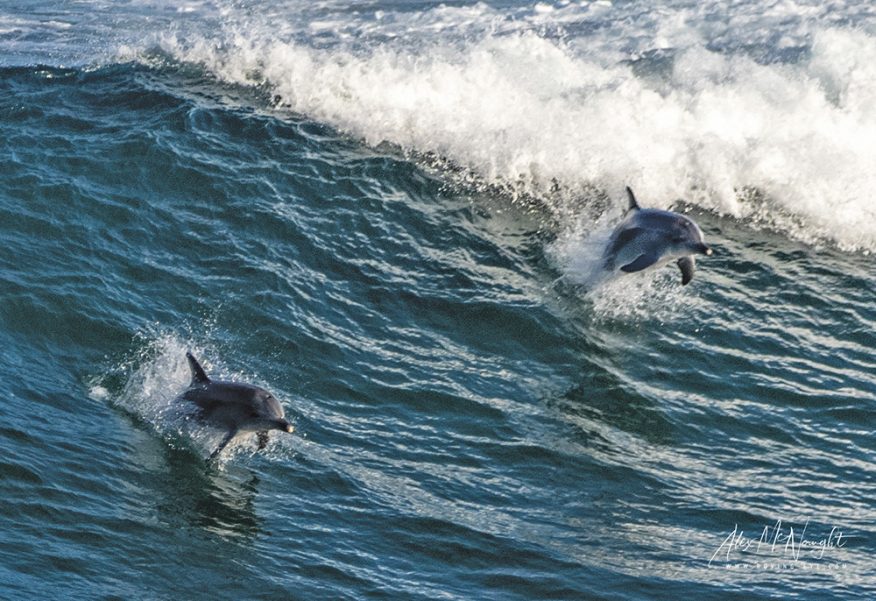
Communities across NSW are invited to register as a volunteer and help protect dolphins by taking part in the first statewide Dolphin Census on Saturday 30 May.
The one-day census is a collaboration between Dolphin Research Australia and NSW National Parks and Wildlife Service (NPWS) to create a statewide snapshot of where dolphins are found and what habitat they use.
Volunteers who register will be trained as citizen scientists in the weeks before the NSW Dolphin Census Day, with the project supported by funding from the NSW Marine Estate Management Strategy.
On the day, volunteers will spend at least 15 minutes continuously watching for dolphins from their favourite vantage points along the NSW coast – from beaches and headlands to harbours, bays and river estuaries.
No experience is needed before undertaking the training. People can participate as individuals, with friends or in groups, bringing binoculars or a camera with a zoom lens.
Registered volunteers can choose to attend training in person, join a live webinar or complete a self-paced online course to help identify dolphin species, learn how to collect data and ensure safe observations.
“Most dolphin species rely heavily on coastal habitats, places where people love to work and play, and where our actions can impact them, which makes them highly vulnerable,” said Dolphin Research Australia CEO Dr Liz Hawkins
“At the moment, we simply don’t know enough about many of our dolphin populations. By working together as coastal communities, people across the state can help improve our understanding and contribute to protecting dolphins and their habitats.”
The Indo-Pacific Bottlenose Dolphin is the most often seen species off the NSW coast, living in estuaries, harbours, coastal waters and often playing in the surf at North Beach. This species is globally listed as Near Threatened (no conservation listing in NSW or Australia currently)
Other species seen in NSW waters include the very similar looking but larger offshore bottlenose dolphin, the common dolphin and the Australian humpback dolphins, while occasionally orcas and false killer whales (yes, they are both dolphins!) , the smaller and finer featured oceanic dolphins or even Risso’s dolphins are observed. You can register now at www.dolphinwatch.org.au