

By Michael Burt
The Waterfall Way Community Land Trust (WWCLT) has defended claims the proposed affordable housing project at Lot 1 Ferry Street in Urunga could be a local environmental disaster.
Urunga resident and neighbouring property owner, , is leading a campaign against the proposed development, citing concerns about the impact on birdlife that uses the site and its native ecosystem.
“This land is essential for many threatened species, populations, and ecological communities,” Ms Staunton Latimer said.
“The senseless eradication of a vital wildlife corridor and habitat, for a $1, or six cheap homes simply doesn’t provide generational value.”
“The whole habitat on the site is part of the entire ecosystem and protecting the land here supports protecting the same habitat that koalas and other species that rely on in a symbiotic relationship. Changing even one part will have a ripple effect that will impact this critical habitat essential to these vulnerable and threatened species, and as such are all protected
“One of the charms of living in Urunga is the access we have to wildlife. This greenspace is important to the neighbourhood, and the whole shire. The significance it provides by way of its contribution to biodiversity, air quality, and the urban environment is profound and cannot be replaced once removed.”
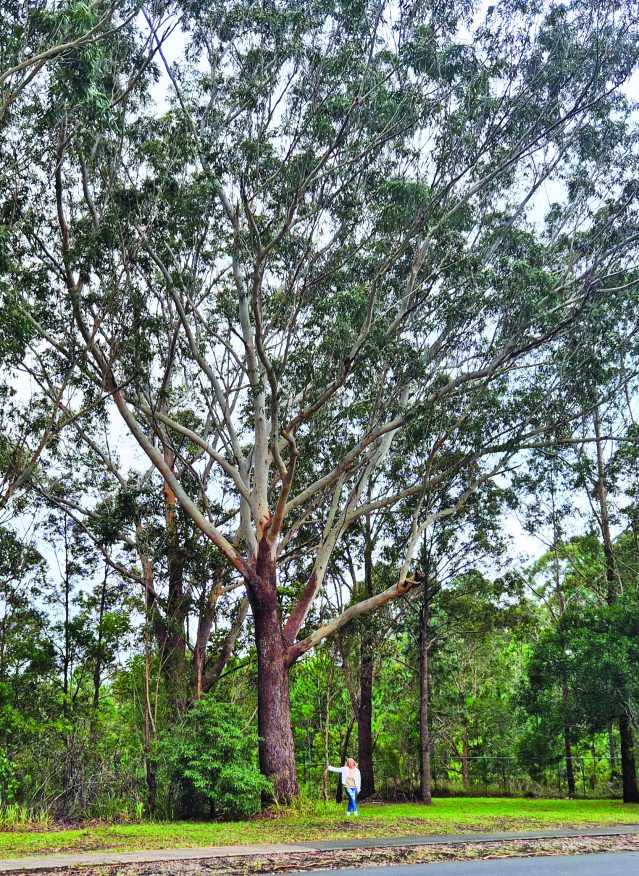
Ms Staunton-Latimer said the WWCLT commissioned a primary ecological assessment that identified at least four significant Blackbutt trees on the site, with others forming.
“Old trees are essential, only trees upwards of 120 years begin to develop the hollows required for the nesting habitats of both the black cockatoo, and the Greater glider.”
“These trees the report stated they are also likely to be utilised by many local threatened species such as the Little Lorikeet, Brush-Tailed Phascogale, Squirrel Glider, and the Eastern Coastal Free Tailed, just to name a few.”
“The vegetation underneath the tree is part of the canopy of the ecosystem that is there. It’s just not the mature trees, this project will impact the native ecosystem that is around them.”
Ms Staunton-Latimer agrees with the need for affordable housing but says there are more suitable sites in the shire for such a project.
“The council said there were 20 properties identified at the time of looking for suitable sites, but the council argued that this was the easiest.”
WWCLT Executive Officer Kerry Pearse said they will be seeking to improve the sites’ environmental assets, not destroy them, if the project gets the green light.
“We are of the view that we will actually be able to improve the biodiversity on the site, and we are committed to doing that,” Ms Pearse said.
“Our commitment is to work with environmental groups to improve the site. We want to work in close partnership with Landcare and are already working closely with the Yurruungga Aboriginal Corporation.”
Ms Pearse said they also liaising with a bird specialist to maintain and improve the site as a wildlife corridor and native ecosystem.
“We have a strong commitment to being environmentally responsible while we are trying to increase the number of affordable homes for locals.”
“We’ve made it clear many months that we will be doing whatever we can to retain the mature trees. We’ve had expert advice on how best to protect the trees roots during any potential construction phase and ensure proper water management for the tree roots.”
“We’ve also had an arborist inspect the trees and there is a detailed tree survey that has provided us with advice about the environmental value of vegetation on the site. We have also commissioned someone to review historical photos of the site.”
“In terms of concerns about the project will destroy valuable urban greenscape, there is more than 100,000 square metres of uncleared land for public use immediately near this site.”
“The site for the proposed affordable housing project is only around two per cent land.”
Ms Pearse said more environmental assessments will be required if the project gets to the planning and construction phase.