

By Bellingen Shire News
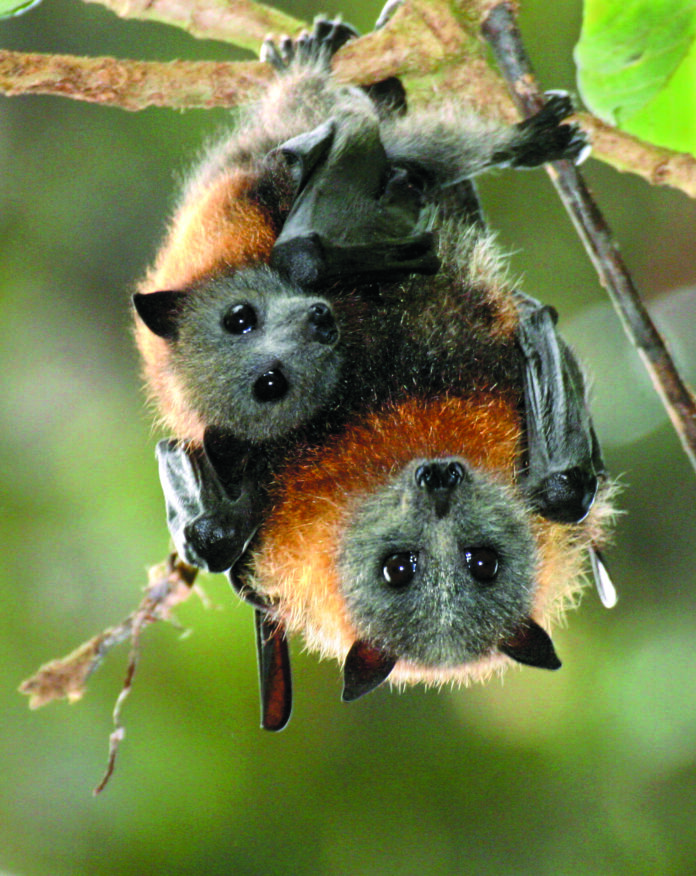
The Grey-headed Flying-fox colony at Bat Island on the Bellinger River has fallen to 25 per cent of its expected population, according to monthly counts conducted by local ecologist Tim Pearson.
Pearson’s most recent count found only a quarter of the flying-foxes that would normally roost at the site. Of greater concern was a very small number of pregnant females present in what is an important maternity camp.
The decline reflects a combination of factors: ongoing habitat loss, drought, and an unseasonal early flowering of broad-leaved paperbark (Melaleuca quinquenervia), which flying-foxes in the region rely on for food at the end of winter.
Justine Elder, from Jaliigiirr Biodiversity Alliance, said habitat loss was the underlying cause.
“Habitat loss and fragmentation are the root cause of this crisis, with a changing climate worsening the situation,” Ms Elder said.
The Department of Primary Industries and Regional Development has assessed 100 per cent of the Bellingen Shire as currently drought affected. Material submitted to BSN by the Greens cites research indicating drought can reduce the food value of nectar by up to 95 per cent in some plant species – significant for a species that depends on nectar as its primary food source.
Ms Elder said females were being affected at a critical time.
“The loss of habitat, a nectar dearth, and unseasonal flowering have meant that Grey-headed Flying-fox females which are giving birth at the moment are underweight and unable to produce enough milk for their young,” she said.
The Grey-headed Flying-fox is listed as Vulnerable under both national and NSW legislation. The species plays a role in pollination and seed dispersal across rainforest and woodland ecosystems.
Jaliigiirr Biodiversity Alliance and partner organisations — including Bellingen Landcare and Coffs Harbour Regional Landcare – have been planting feed and roosting trees for flying-foxes over the past five years, though those plantings are not yet producing food.
The matter was raised with BSN by Gary Fry, Communications Manager for the Greens in Bellingen Shire.
ADVISORY — WIRES (WILDLIFE INFORMATION, RESCUE AND EDUCATION SERVICE)
If you come across a flying-fox or bat that is sick, injured, or orphaned, it is essential to keep your distance and avoid touching or handling it. These animals can carry a virus that is harmful to humans, although only a small percentage of them are believed to be carriers. Therefore, it is crucial to take necessary precautions and avoid any risks.
For orphaned, displaced or unwell flying-fox or microbat advice and/or rescue please contact WIRES Rescue Line on 1300 094 737 or online at https://www.wires.org.au/report-a-rescue
Please note that WIRES is handling very large call volumes currently due to H5N1 Bird flu virus and ongoing wildlife emergencies – please be patient and your enquiry will be responded to as quickly as possible.
In the mean time you can provide shade to keep the flying-fox out of direct sunlight if feasible and safe to do so. If the animal is on the ground, especially on a hot day, place an umbrella or shade structure over it.