

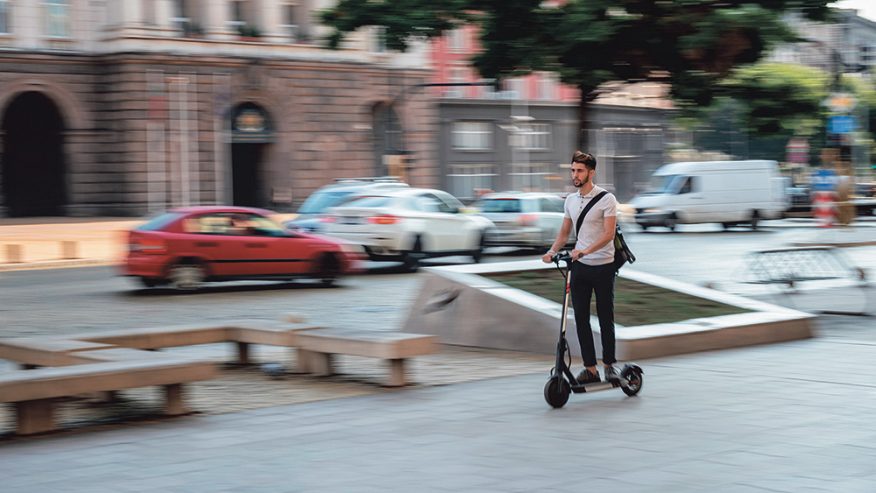
New Research has shown a four-fold increase in injuries among children across four years is one of the most troubling consequences of Australia’s e-scooter boom.
The UNSW research examined almost 4700 e-scooter-related emergency department presentations in Victoria and found injuries among children aged two to 14 rose from 64 cases in 2022 to 263 in 2025, even though children under 16 are prohibited from riding e-scooters on roads.
Lead author Dr Lisa Sharwood, an injury epidemiologist at UNSW, said the findings are indicative of a growing challenge not only in Australia, but around the world.
“The increase in injuries among children appears to be linked to the growing availability of privately owned e-scooters,” Dr Sharwood said.
“Share-hire schemes have age-verification systems and do not allow children under 16 to ride – but privately owned devices are much easier for children to access.”
Dr Sharwood said many parents still view e-scooters as recreational devices rather than vehicles capable of causing serious harm.
“What parents need to understand is that e-scooters are not toys. They can travel at speeds capable of causing serious injuries, including fractures and head injuries.
While children represented one of the fastest-growing groups, the study also found young men remained the demographic most likely to be injured, accounting for 71.4% of hospital presentations.
There were 4694 emergency department presentations linked to e-scooters between 2022 and 2025, including 79 pedestrians struck by riders. Young adults aged 15–24 and 25–34 accounted for almost half of all presentations.
More than one-third of injured riders required hospital admission, while around one-third arrived by ambulance – and most were classified as urgent or emergency cases.
“Emergency clinicians are not simply treating scrapes and bruises due to e-scooter injuries. They are seeing fractures, head injuries and injuries affecting multiple parts of the body.”
The head was the most likely body region to be injured, ahead of injuries to the wrist, hand and forearm.
Co-author UNSW Professor Alexandra Martiniuk says the findings show e-scooter injuries represent a genuine and growing burden on the healthcare system.
“These cases require significant hospital resources and place additional pressure on already busy emergency departments,” Prof. Martiniuk said.
The study was published amid a growing focus from governments across Australia on how best to regulate e-scooters. The 2026–27 Australian Federal Budget allocated $6.6 million to strengthen product safety frameworks and compliance standards for e-bikes and e-micromobility devices – including e-scooters – alongside a broader $500 million investment in active transport infrastructure.
“It’s likely the solution will require a combination of enforcement, parental awareness and retailer responsibility,” Dr Sharwood said.
“Currently there is a disconnect between the rules and what is happening in practice.”