
By Daniel Honan
Bellingen humanitarian Deborah Neale has spent years travelling to schools and communities around the world in the aftermath of disaster and violence, through the organisation she founded, Emergency Pedagogy Without Borders – Australia.
In August, that work took her to the Philippines, to a school community still reeling from a deadly shooting in June. She shares her account of what she found, and what helped the community begin to recover.
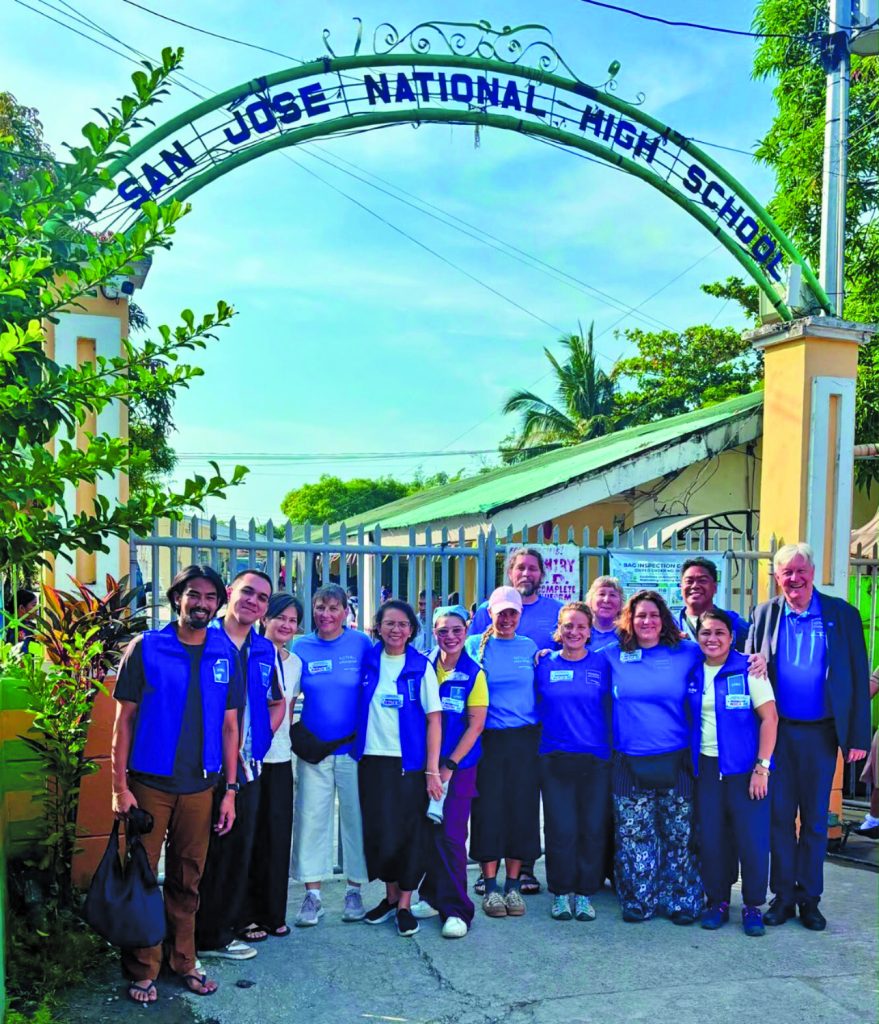
Deborah travelled with two members of her Australian team to San Jose National High School in Tacloban, joining an international team led by Emergency Pedagogy founder Bernd Ruf.
The school, with around 1,600 students and more than 100 staff, was still deeply affected by the 22 June shooting in which three students were killed and around 20 others injured.
“An act of violence such as this has a profound and far-reaching impact on an entire community,” Deborah said. “It does not end when the immediate danger has passed. It affects students, teachers, families and relationships, and can fundamentally change people’s sense of safety and trust in the world.”
“When we arrived, the whole school community was still in shock.”
Students were experiencing panic and acute distress. Sudden noises could trigger fear and cause students to flee, and as many as 15 students a day were fainting or losing consciousness during panic attacks. Ten students had still not returned to school.
An important focus of Emergency Pedagogy is supporting the adults around the children. Teachers spoke of nightmares, shaking, sudden crying, anger, guilt and exhaustion. Many were trying to remain strong for students while struggling to regain their own stability.
“Supporting the adults is essential,” Deborah said. “When teachers begin to stabilise themselves, they are better able to create the safe, predictable environment young people need in order to recover.”
The team provided psychosocial education for teachers, while a therapeutic clinic offered staff and students a place to rest and receive care.
Students participated in four days of Emergency Pedagogy interventions. Sometimes described as “pedagogical first aid”, these trauma-informed educational approaches support stabilisation following an overwhelming event.
Rather than asking young people to repeatedly retell what happened, the focus is on helping them experience safety again through predictable rhythm, movement, cooperative games, art, music, singing and handwork. Rhythm can bring structure where trauma has created chaos; movement supports connection; and creative activity helps restore a sense of agency.
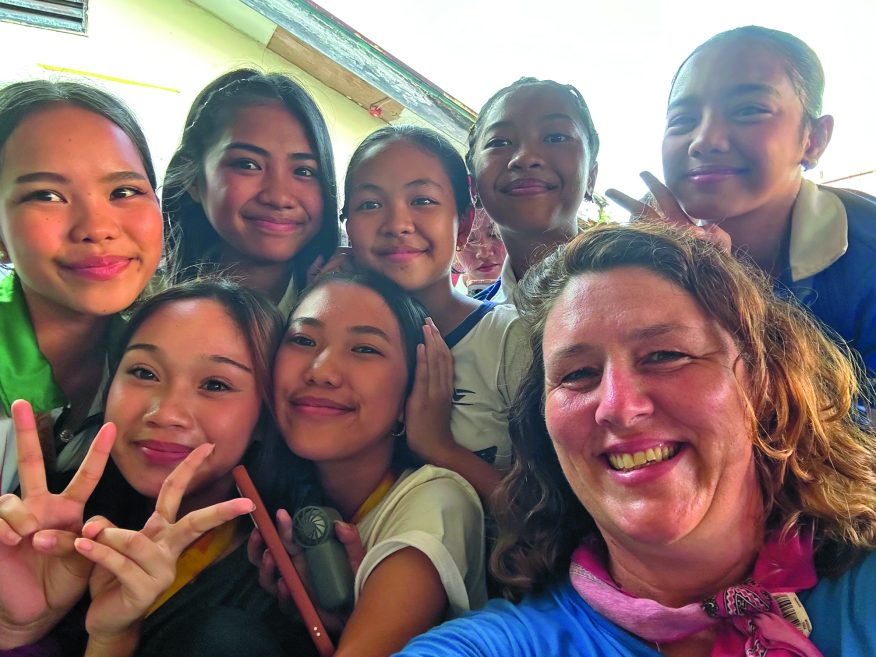
“On the final day, a group of students I had been working with spontaneously began to sing,” Deborah said. “I knew then that something of safety had returned. There was joy in the room again.” By the end of the intervention, students were no longer losing consciousness in the same way, and teachers were beginning to speak about hope. The school has since established Fridays as Emergency Pedagogy Day.
For Deborah, the experience reinforced a central principle: recovery happens through relationship and community – and the adults who hold children also need to be held.